
This week’s post is a collaboration with my dear friend, Fiona, in New Zealand. Her website Sacred Simplicity has many recipes and tips you’ll appreciate—including foods you may not have heard of. It’s a treasure! We’re sharing wartime apple recipes from both of our countries so you can try desserts from both hemispheres. Her website information is below. Enjoy!
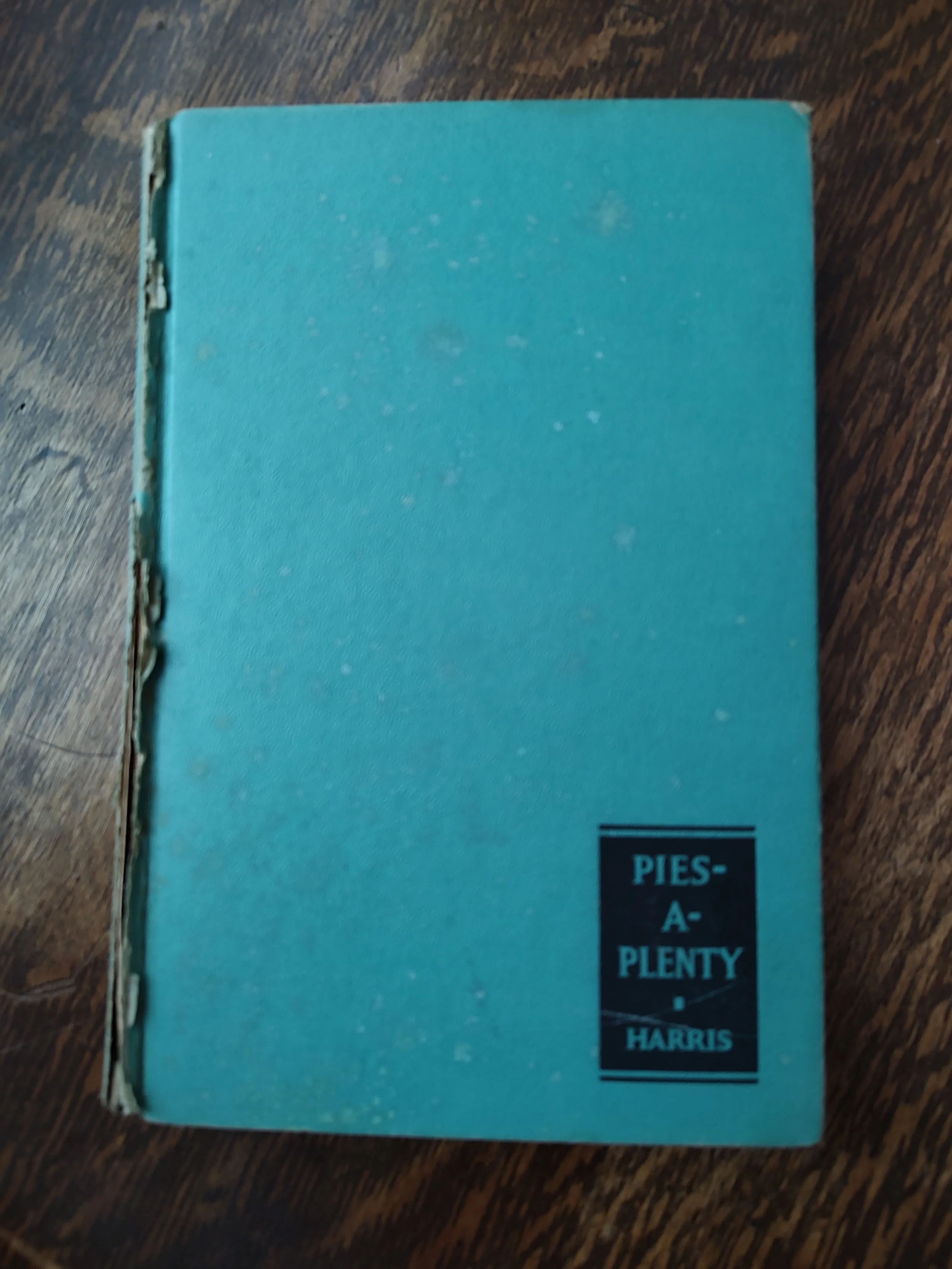
My husband and I took a day trip recently and found a couple of new-to-us antique shops. It was a refreshing time away and I ended up with a 1940s cookbook all about pie! During World War II—and the Great Depression—pies were a great way to pull together dinner or dessert for homemakers who had little to work with. In fact, one of the most famous wartime dishes in Britain was a pie (which you can read about in my blog post A Quintessential Food of World War II—Lord Woolton Pie).
Forgotten Recipes
It seems every time I venture into the world of an old cookbook I find recipes that are no longer in use but so good, it makes me wonder why. Pies A-Plenty has loads of them; have you ever heard of a lemon juice pie crust or cinnamon marshmallow meringue?
And this cookbook has an entire chapter dedicated solely to apple pies—cheese topped apple pie, cheese crust apple pie, apple pie with honey, open apple pie with ruby glaze, cider apple pie, apple custard pie, applesauce pie with meringue, ruby red apple pie and “peachy” apple pie—and more! Can any modern cookbook compete?
A Crust Above
Pies A-Plenty also has no less than 22 recipes for pie crust, with cream, juices, herbs and spices, nuts and a variety of crushed cereals. The wartime homemaker might have made a pie crust from any number of options depending on what was in the pantry.
I was intrigued by the hot water crust recipe. It was almost too easy—this would be a wonderful recipe for children to make. It does need time to rest in the refrigerator but it’s worth it. The crust is just as tender even after the pie is cold.
Special Pies in Wartime
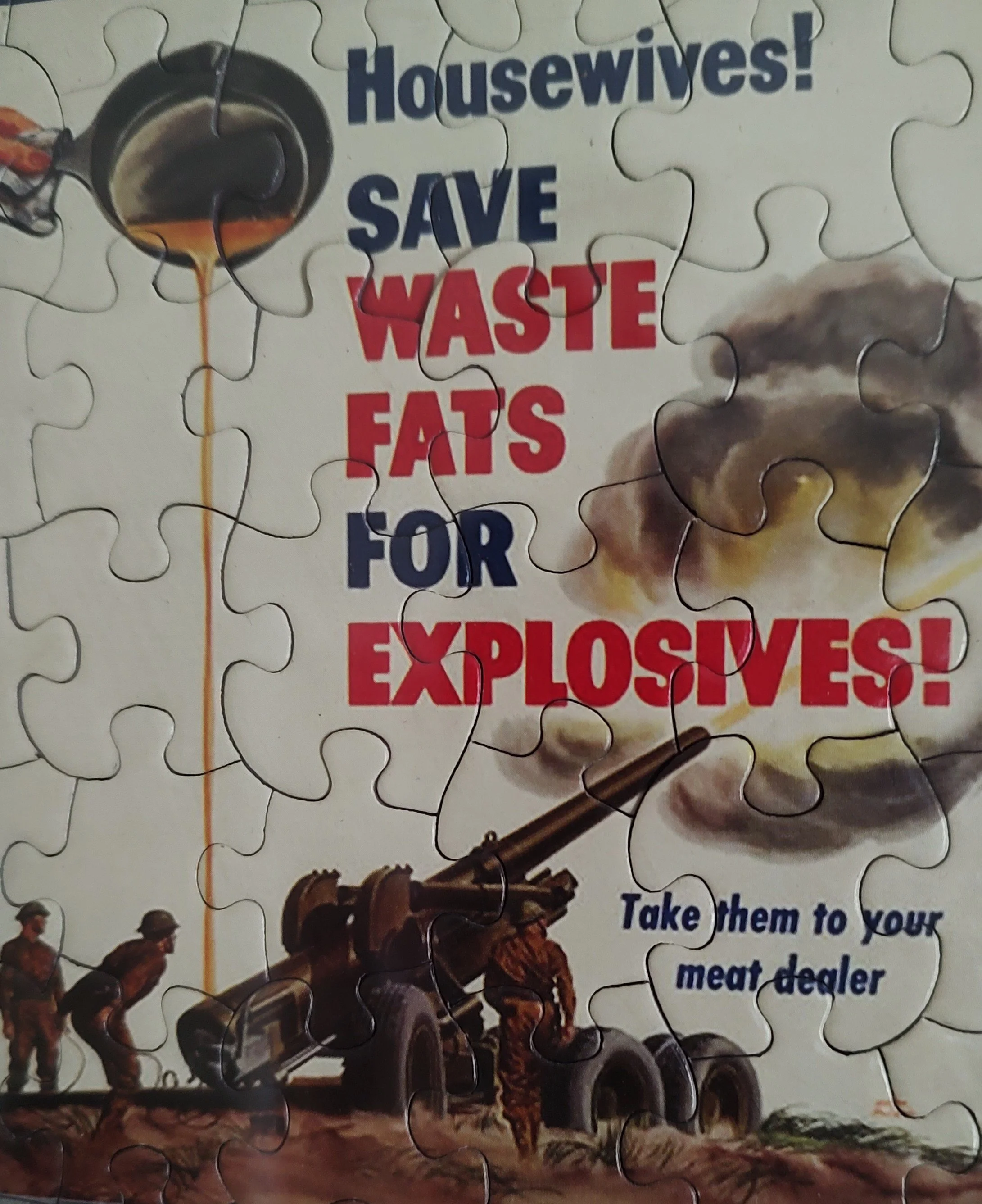
Many pies would have been only a dream for homemakers in nations with combat zones. In the United States, Canada, Australia and New Zealand some might have been possible, although still a challenge. Rationing and shortages affected these nations, too—much of what they produced was allocated for military use. Shortening, butter and cream would have been precious ingredients.
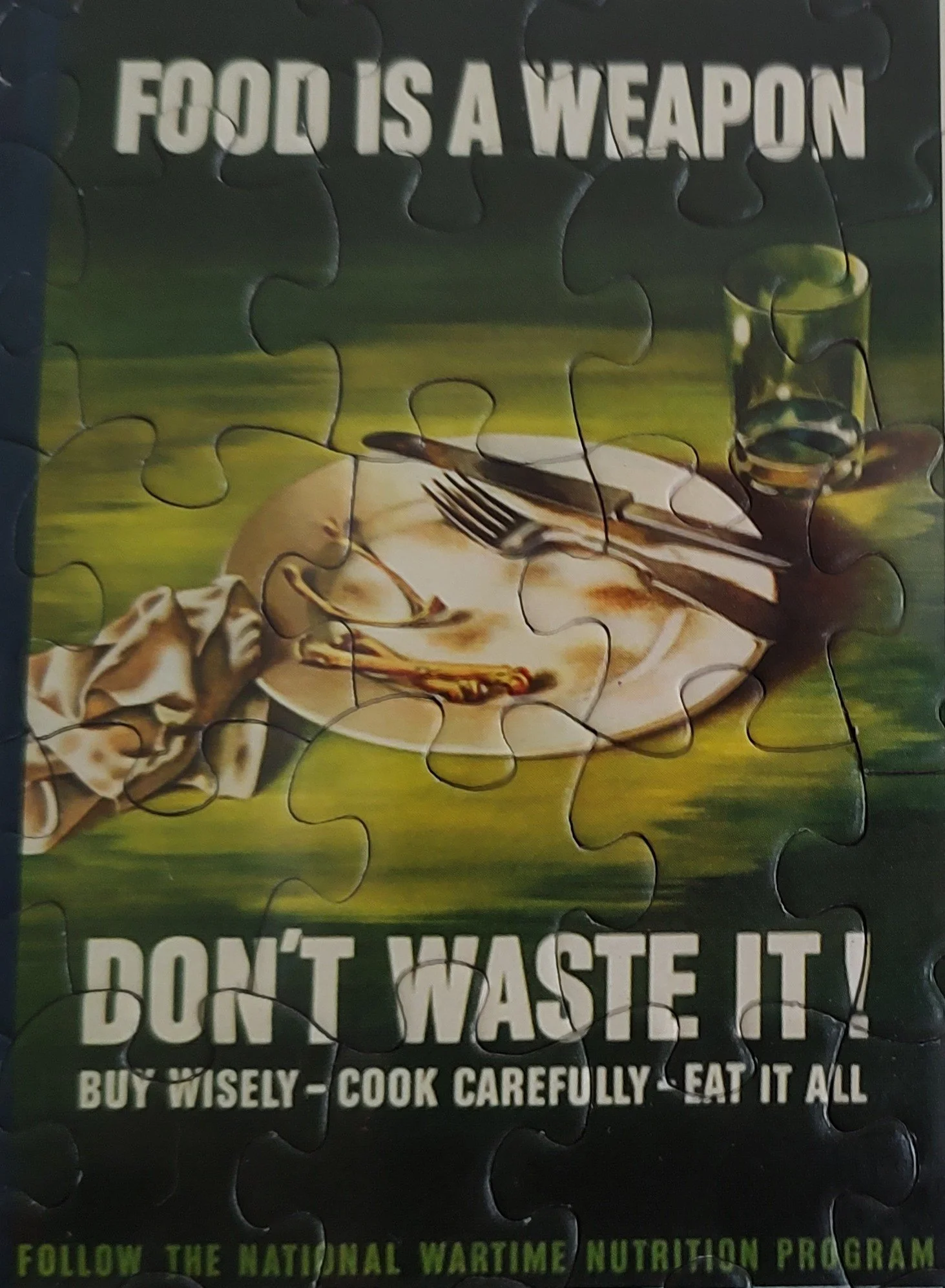
Even used cooking fats were saved for glycerin, needed for making ammunition. Below you can see photos from a puzzle of World War II-era posters—governments kept reminding homemakers to save fats and food!

New Things & Lost Things
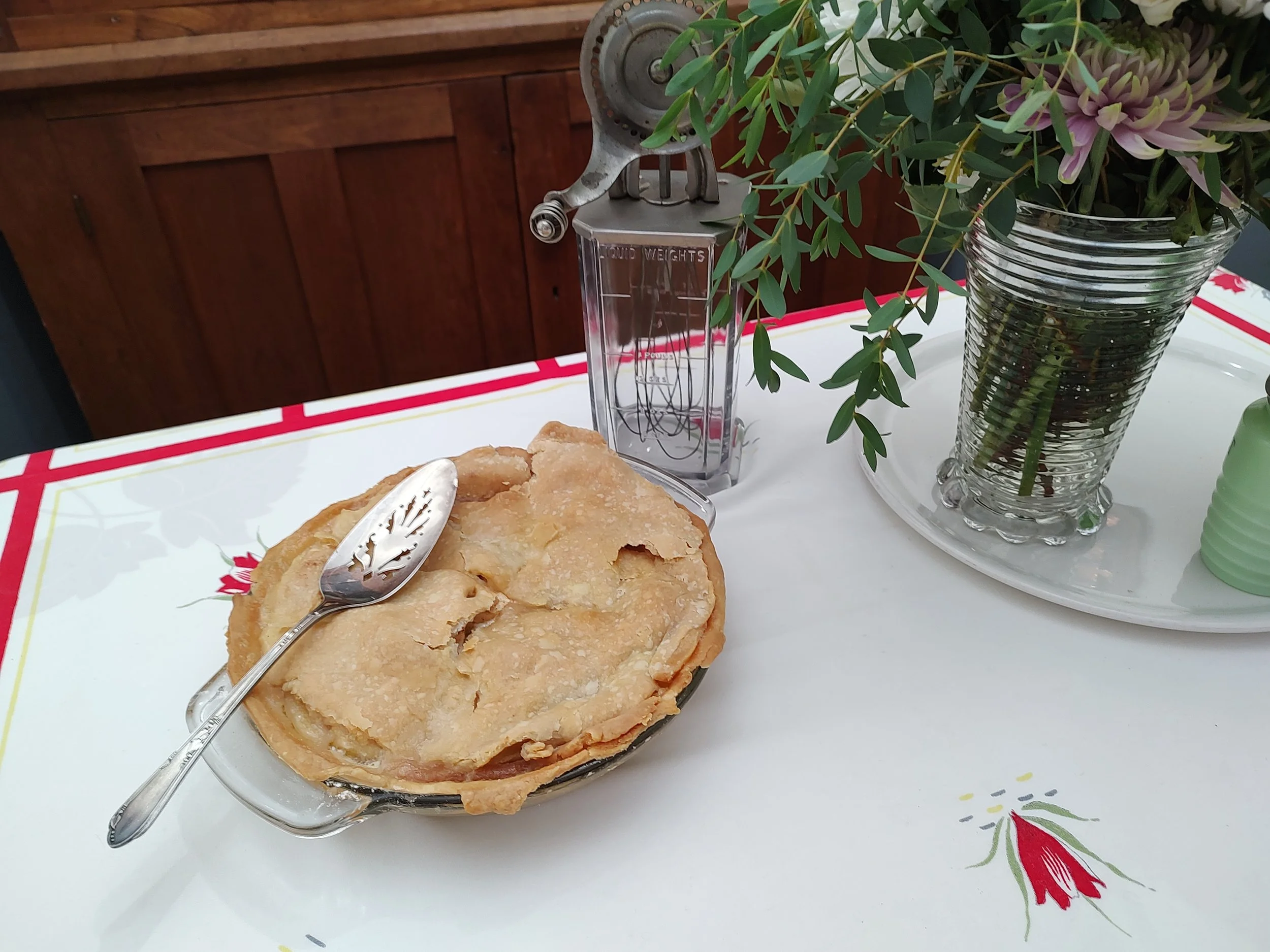
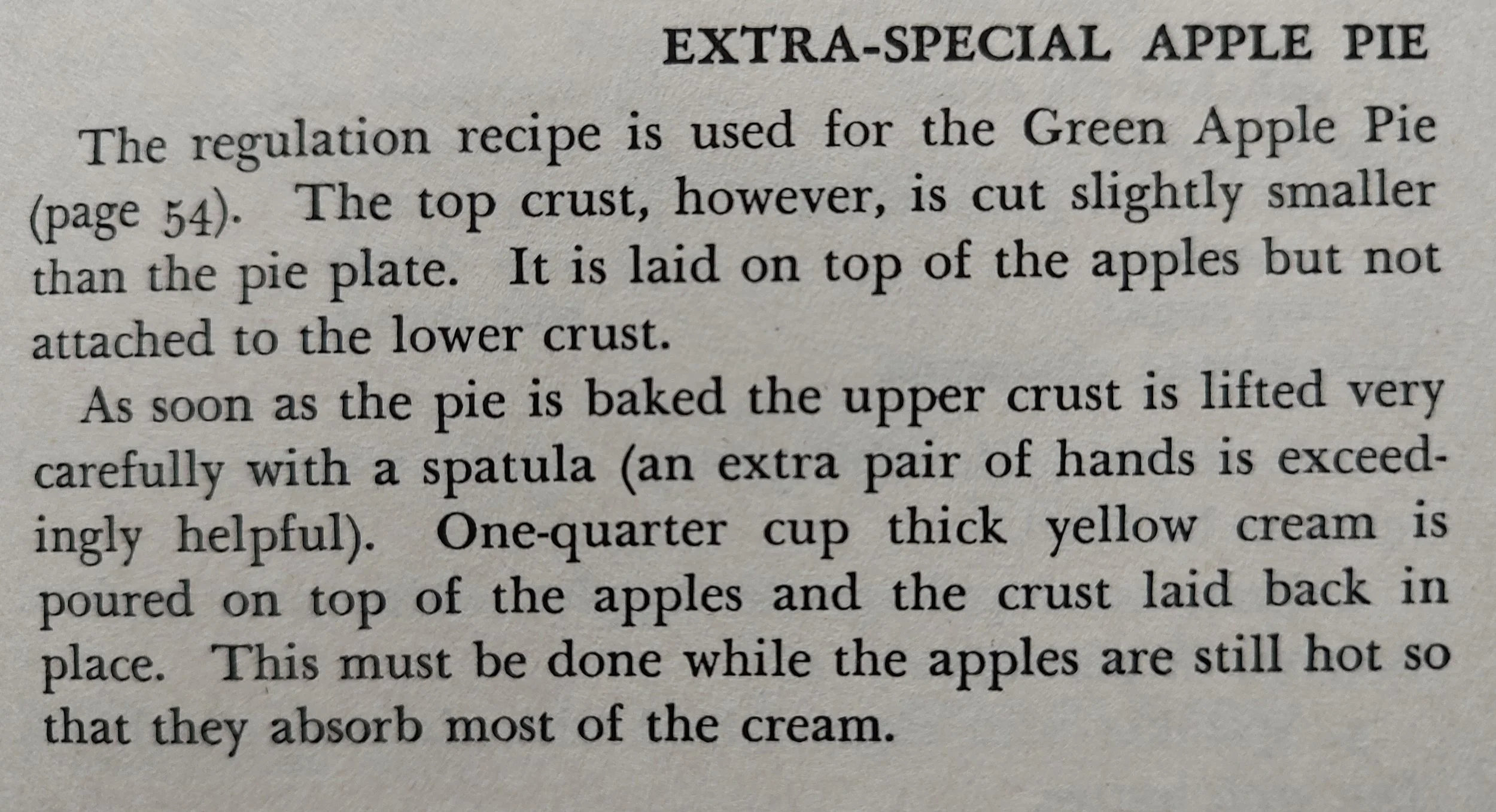
If the pie doesn’t look “extra special” it is—in more than one way! The cream, soaked into the hot apples, took the pie to another level. But removing the entire top crust of a flaky, baked pie was an experience. I’m not sure if the extra pair of hands mentioned in the recipe would have helped much. The crust turned out so tender and the filling so fabulous, it was worth trying something new and different in this case. It did bring to mind a few other “new” things homemakers during World War II were encouraged to try—like whale meat, pie pastry made from grated raw potato, sandwiches filled with peanut butter and olives, or some of the disgusting mock whipped cream recipes. Those must have been so discouraging.
The level of creativity in this one cookbook is amazing but the recipes are mostly “from scratch.” One of the outcomes of women entering the work force during World War II was that society never recovered its former equilibrium. Many women wanted to continue earning a salary so the postwar period saw a dramatic increase in convenience foods and “quick and easy” recipes. This began the mid-century era of one-pot dishes, Jell-O® and condensed soups—and the loss of quaint, delicious recipes from a way of life that disappeared after the war.
Pies A-Plenty is a silent reminder of a different world. Even in the midst of war, homemakers found time to put together meals made from real food. They didn’t have much choice. As much work as it was for them to prepare healthful meals, perhaps it was a blessing in disguise.
Visit Fiona’s website to find wartime desserts from New Zealand: https://sacredsimplicitylife.blogspot.com/. She has shared two lovely apple recipes—plus an apple-pie quote from Jane Austen! Fiona’s posts are delightful and insightful—I hope you will enjoy them.

Hot Water Pie Crust
This has got to be the easiest pie crust ever. It's made several hours ahead of time but is so worth it! The crumb is still tender the next day, and even after refrigerating.
Ingredients
Instructions
- Bring the water to a boil. Add the shortening. Stir until smooth.
- Sift, measure and sift the flour. Add the salt and baking powder.
- Combine the mixtures. Stir until smooth.
- Set in covered container in refrigerator for about twelve hours.

Extra-Special Apple Pie
The "regulation" recipe for Green Apple Pie, transformed into an extra-special version. The transformation may leave the top crust a bit homespun but WOW! what a pie.
Ingredients
Instructions
- Preheat oven to 450°F / 232°C. Line pie plate with pastry. Set in refrigerator until ready to fill.
- Wash, pare, core, cut apples into quarters, eighths, or slices as desired.
- If apples are juicy, mix one to two tablespoons flour with the sugar. Put one-fourth this flour-sugar mixture in the bottom of the pie crust. Arrange apples in orderly rows, piling pieces up toward the center of the pie. Season with salt and spice. Put remainder of sugar-flour mixture on top.
- Dot with butter.
- Put on top crust as follows: The top crust is cut slightly smaller than the pie plate. It is laid on top of the apples but now attached to the lower crust.
- Set in preheated oven and bake 10 minutes. Then, lower heat to 350°F / 177°C and baked approximately 40 minutes.
- As soon as the pie is baked the upper crust is lifted very carefully with a spatula (an extra pair of hands is exceedingly helpful). One-quarter cup thick yellow cream is poured on top of the apples and the crust laid back in place. this must be done while the apples are still hot so that they absorb most of the cream.
References
La Ganke Harris, Florence. Pies A-Plenty. Garden City, NY: Blue Ribbon Books, 1949 [reprint of 1940 edition].
“The LORD is faithful, and He will strengthen you and protect you from the evil one.”
2 Thessalonians 3:3