
The Great Bread Crumb Transformation
JUMP TO RECIPE
On the back of a much-aged, water-damaged box of something unidentifiable, I may have stumbled upon the best use ever for leftover bread crumbs.
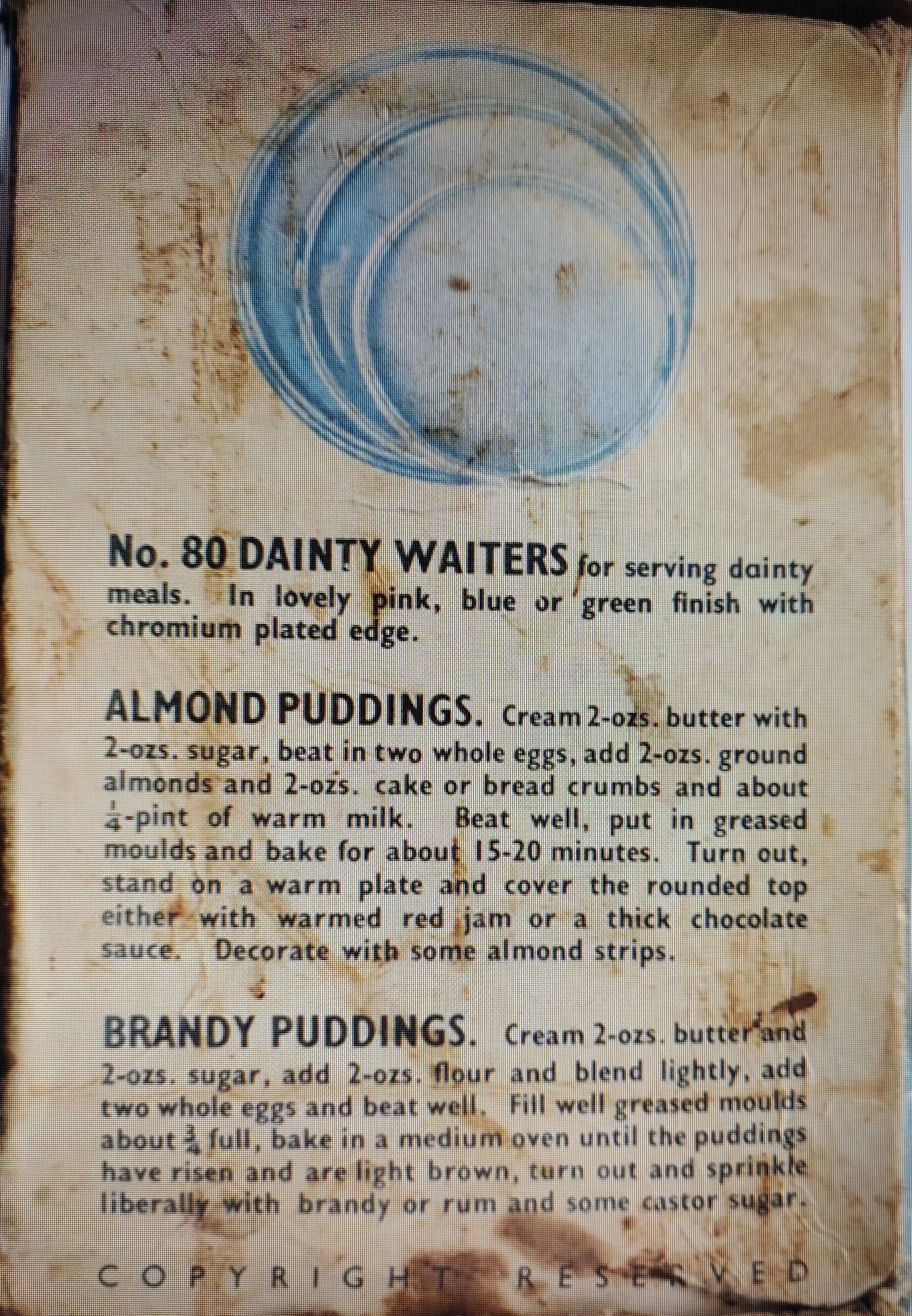
Box-Back Recipes
“Dainty Waiters” were advertised on the box that is obviously too small to contain one of those serving dishes. But two tempting recipes follow. I decided to try the first one for Almond Puddings. The recipe has simple ingredients and took only minutes to prepare and bake. The result was a delectable dessert. This recipe is a winner!
Using Up the Bread
During World War II, bread rationing was serious business in countries such as Britain. Not as much in the US, although American homemakers did endure a short period of angst when sliced bread was removed from the market. Someone had the bright idea that the metal on the slicing machines could be recycled for war purposes. That did not turn out to be the case, and the government received so many letters from frustrated homemakers that the ban was lifted in fewer than two months.
In Britain the only legal bread was the National Loaf. Made using 85% whole grain, the lingering memory of this bread was that it had a greyish cast and an unpleasant, coarse texture. It was jokingly called “Hitler’s Secret Weapon.” But using more of the whole grain in breadmaking meant less grain needed to be shipped. Whole-wheat bread also contributed nutrients to help prevent disease outbreaks that were a risk since many of the pre-war foods weren’t as plentiful.
Bread was not rationed during the war but strict no-waste measures were in place. The National Loaf, unpleasant as it may have been, contained valuable wheat and was absolutely not to be wasted—in fact, wasting bread was considered a crime against the war effort. There are reports of people being fined or jailed for feeding stale bread to animals. Also, bakers were not allowed to sell loaves on the day they were baked, but only the next day, as day-old bread was easier to slice thinly.
Bread Rationing
The worst insult came at the end of the war when the National Loaf was rationed—as it had not been during the entire war. Those were the years of austerity when other European nations—whose citizens had been starved—desperately needed help with food. Bread rationing was in effect from 1946 to 1948. White bread finally returned to Britain in 1956. Can you imagine the sandwich craze that must have sparked?!
Almond Puddings
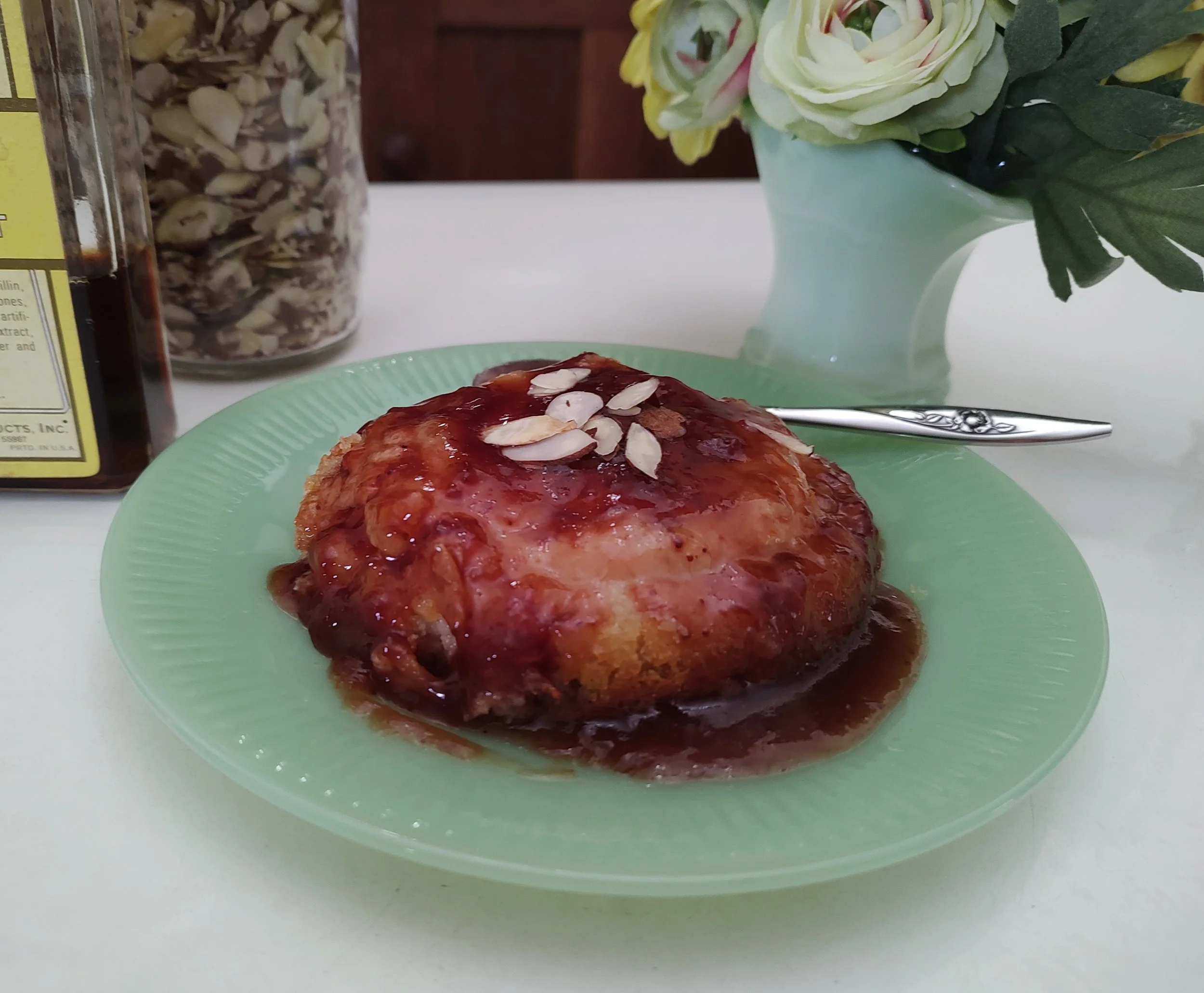
I enjoyed my leftover bread crumbs in almond puddings. I made a few adjustments to the recipe—blanched almond flour and slivered almonds bring this dessert together quickly. And, although many World War II recipes use very little seasoning, I thought the puddings would taste better with the addition of vanilla and almond extracts. Any type of red jam would work but cherries are a natural complement to almonds. Cherry jam takes these puddings right over the top.
The bread crumbs I used were from a loaf of 100% whole wheat bread I had made. If the density of 100% whole wheat didn’t ruin them, then most any bread crumbs ought to work! Even gluten-free bread or cake crumbs would work in this recipe.
I could not tell at all that there were bread crumbs in the finished puddings—the consistency was tender and delicate but with a rich flavor. If you need a dessert that can be made quickly and is pretty enough for company, I highly recommend this one. Next time I may try it with leftover cake crumbs.
The almond pudding recipe would have taken two precious eggs from the weekly ration but in return, it would have yielded four generous servings of a scrumptious dessert along with nutrients and tummy-filling power—all things the World War II homemaker would have valued.

Almond Puddings
My adaptation of a vintage dessert recipe found on the back of an old box. This pudding could have worked beautifully during World War II! It is a tasteful and delightful way to use up bread (or cake) crumbs.
Ingredients
Instructions
- Cream butter with sugar.
- Add eggs and almond flour; mix completely.
- Add bread (or cake) crumbs, milk, vanilla extract and almond extract. Mix gently until all ingredients are combined.
- Place mixture in greased molds or ramekins. Bake 15-20 minutes (may need longer if using one large mold). Puddings are done when they are gently set and lightly browned.
- Turn out onto a warm plate. Cover top with either jam or chocolate sauce. Garnish with slivered almonds.
“For I am not ashamed of the gospel, because it is the power of God that brings salvation to everyone who believes.”
Romans 1:16